

ICAD Challenge 2022 - complete!
And that’s a wrap! I am really so grateful to Tammy Garcia at Daisy Yellow for hosting this annual challenge. It’s been a great experience and I’m glad it’s over!
Art Challenges aren’t always easy—thus the word challenge—and it is true, sometimes making a card every day felt like a slog. But sometimes it’s worth the effort to push through to finish a goal. And as it turns out, I met two goals. And yes,

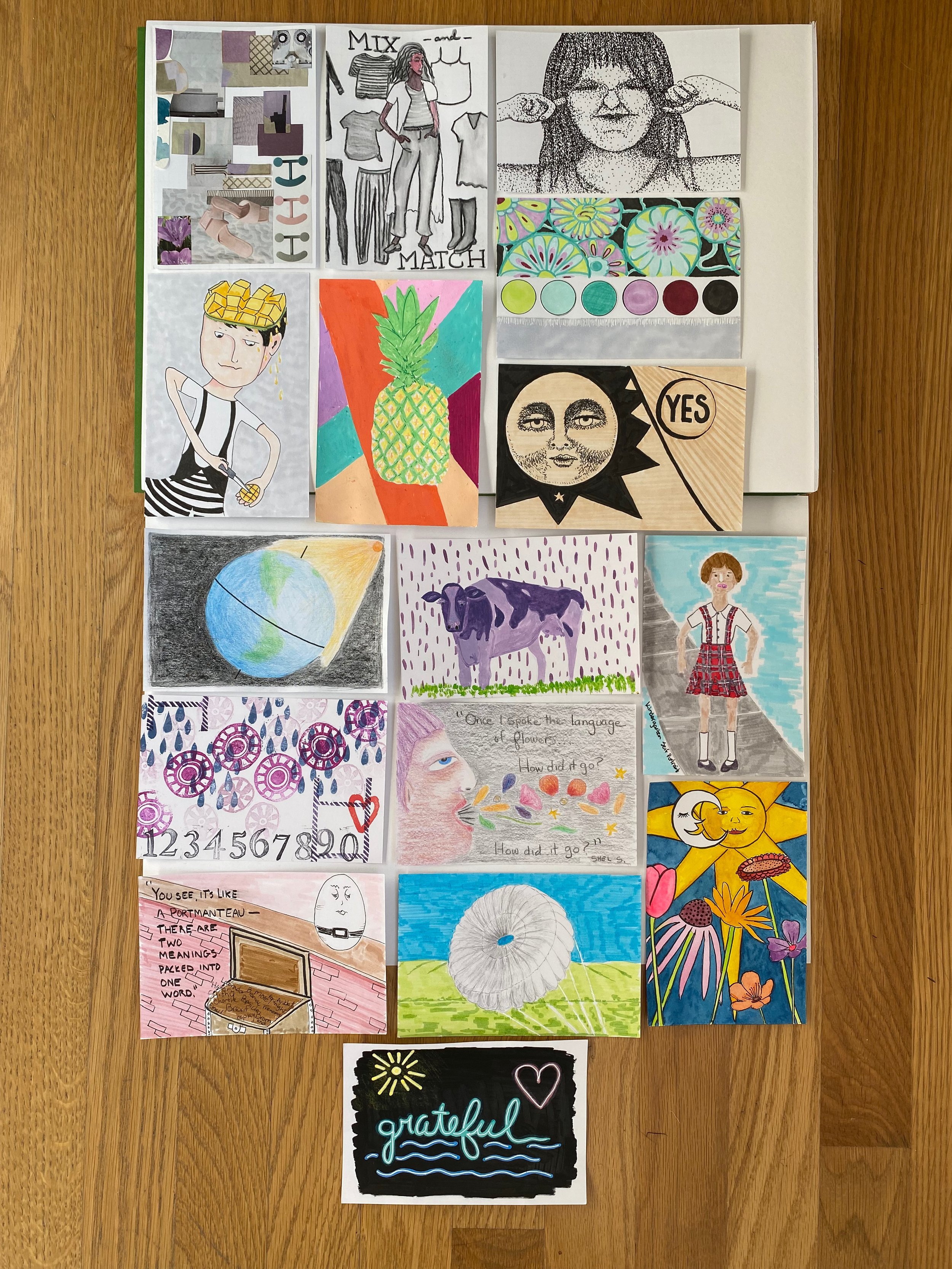
ICAD Cards 1-60 (The challenge is actually 61 index art cards (June and July) but I chose to make 60—it makes for a better grid).
And that’s a wrap! I am really so grateful to Tammy Garcia at Daisy Yellow for hosting this annual challenge. It’s been a great experience and I’m glad it’s over!
Art Challenges aren’t always easy—thus the word challenge—and it is true, sometimes making a card every day felt like a slog. But sometimes it’s worth the effort to push through to finish a goal. And as it turns out, I met two goals. And yes, I feel it was worth it.
For the first 30 days as I explained here, my goal was to release perfectionist tendencies and practice working faster and looser—so I worked on myself as an artist. And it was a good challenge. I did work faster and more loosely, interpreting each day’s prompt without overthinking.

After 30 days of that, though, I shifted focus from process to the art.
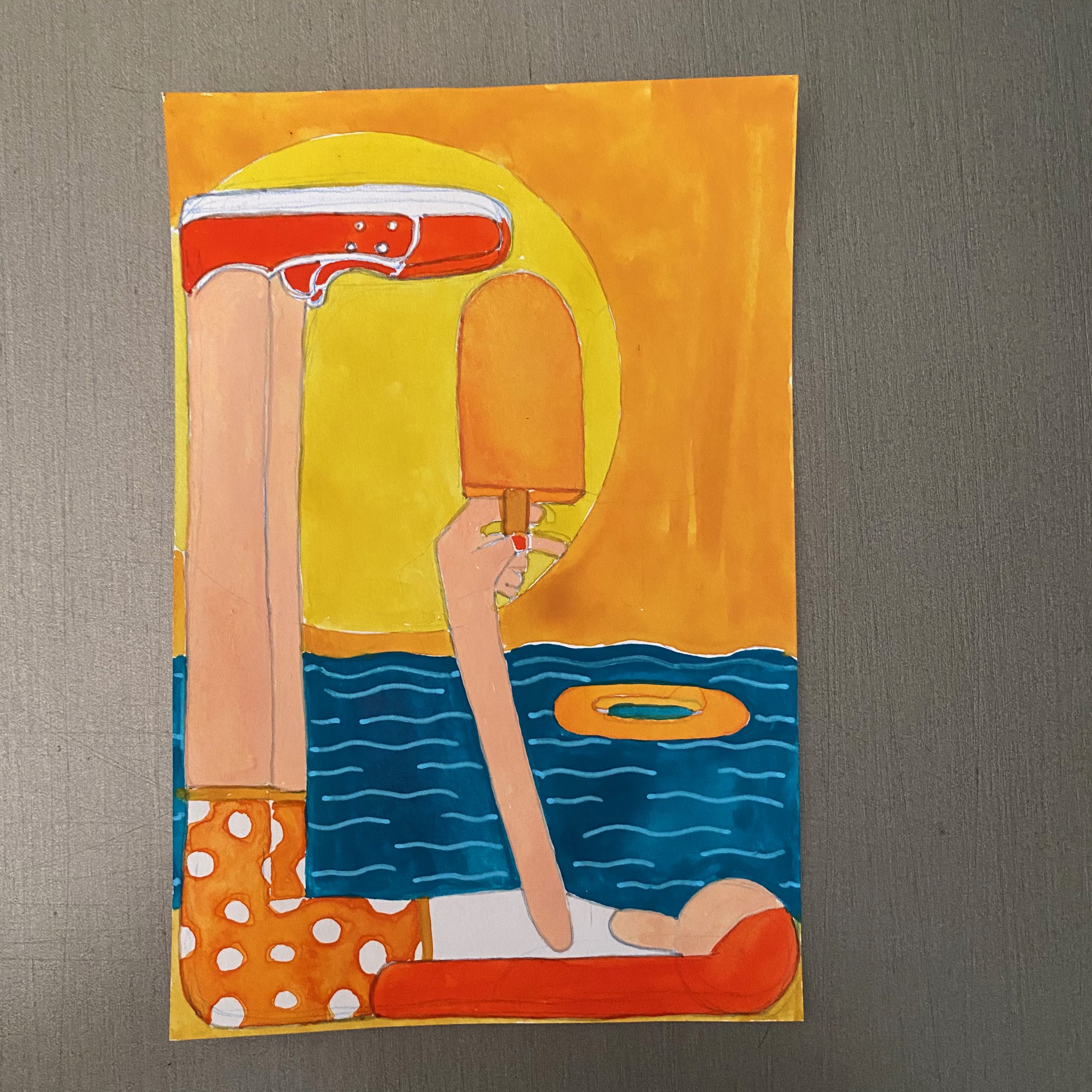
I decided I wanted to learn to use shape and color more effectively, especially when drawing abstractified figures, so each day according to the daily prompt, my goal was to draw a character with shapes and color and less reliance on line.

Days 31-61 (minus one)
As with any challenge, some days worked out better than others, but either way I learned so much. First, I found that it wasn’t easy to draw people in the one style I wanted to create in most—which is very abstract and shape-focused and brings both foreground and background into one cohesive composition. I hit that style only a handful of times really—and these are my favorites:


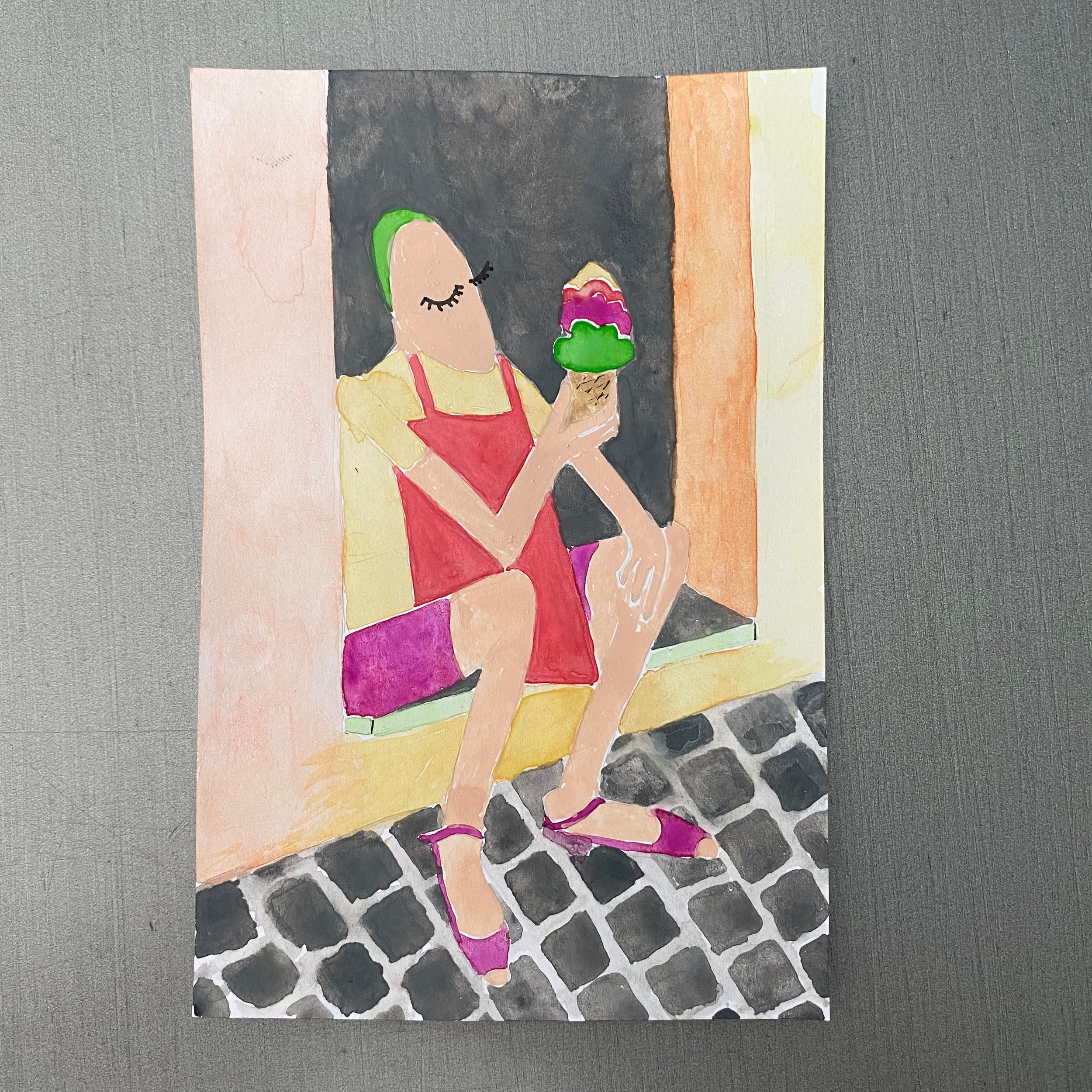
And yet…I also learned that maybe I could play with approaches and achieve slightly different but I think interesting effects. I ended up pleased with other characters in different styles—some with stories to tell like these:


And some quite whimsical and fantastical:
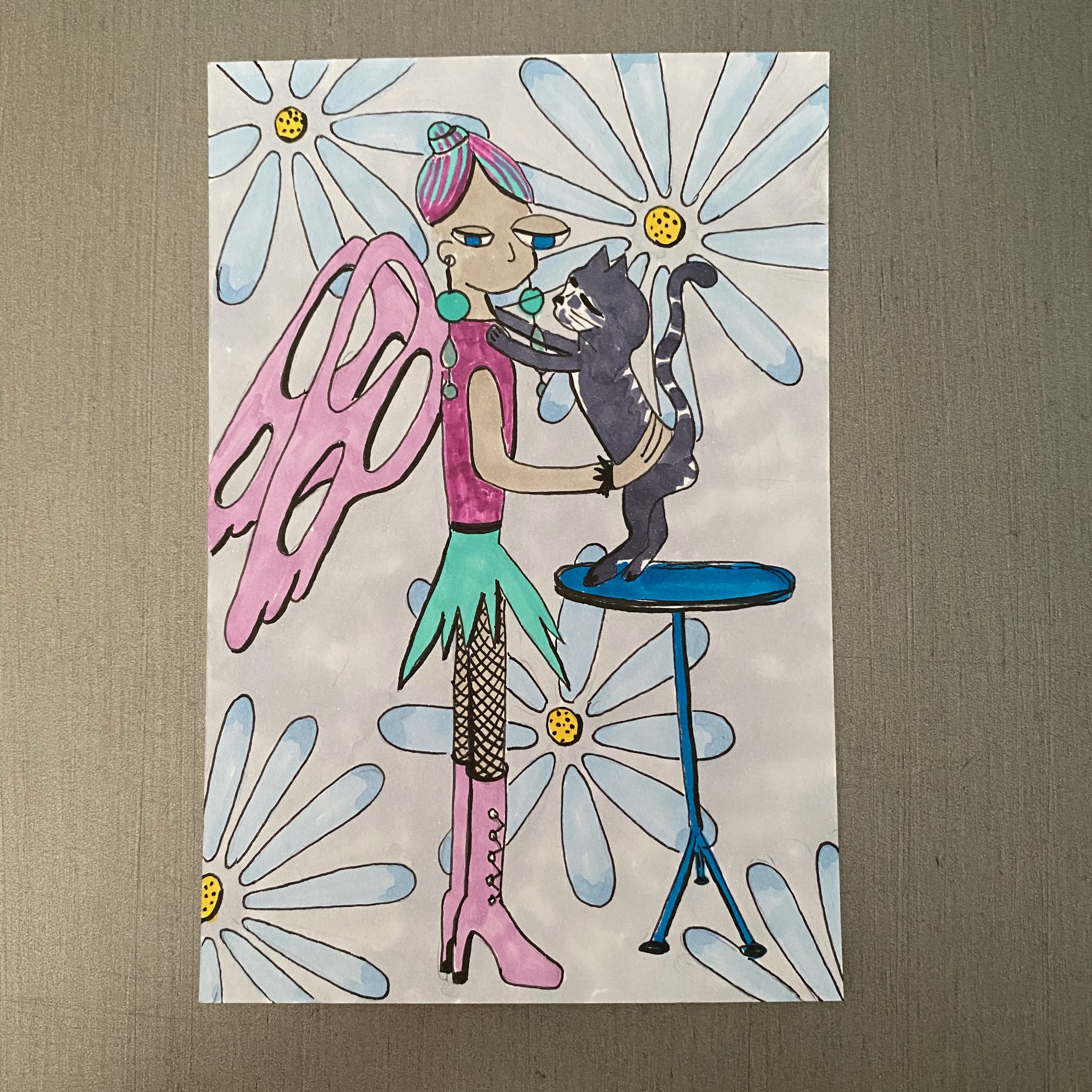
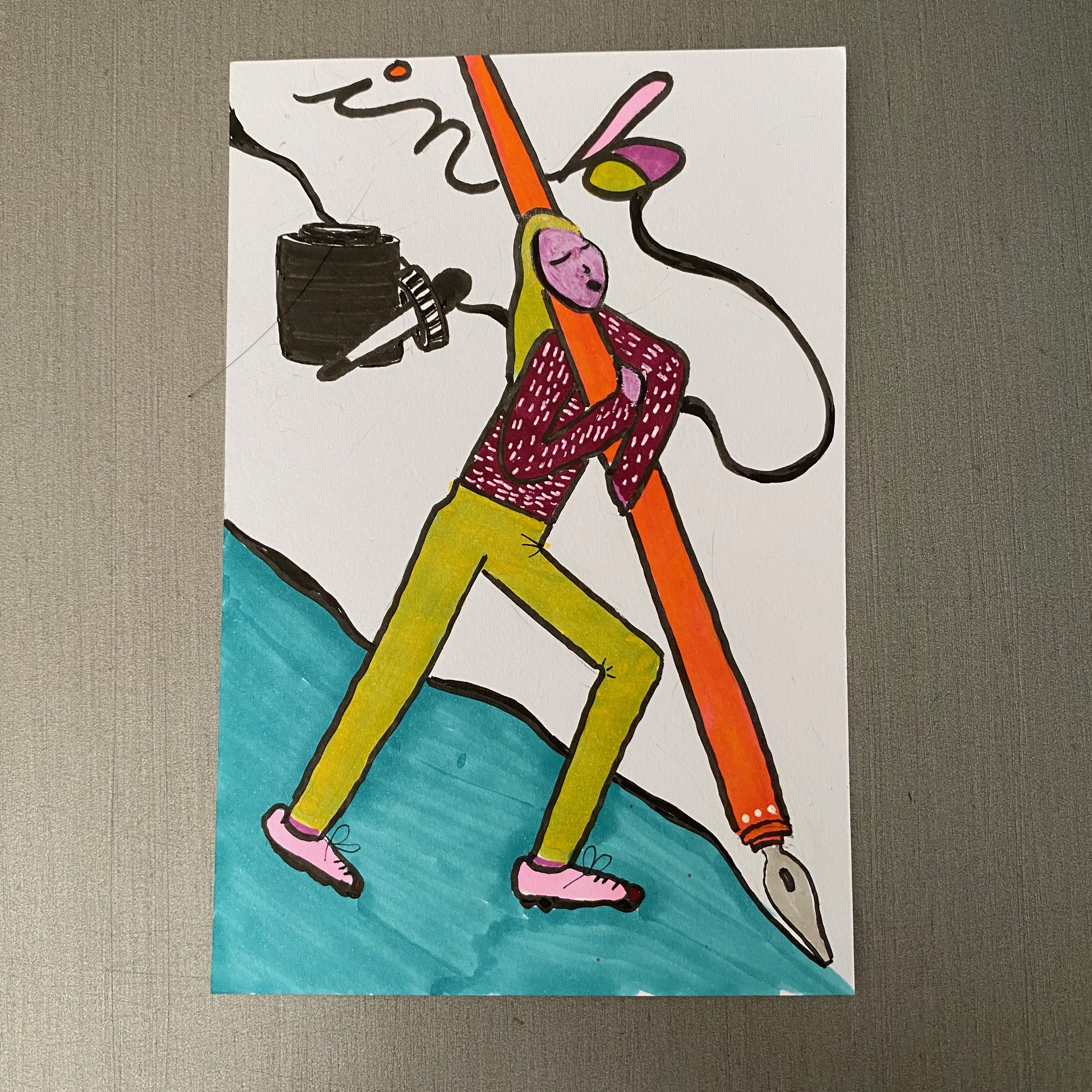

I guess my “style” is asserting itself, whatever my head may have in mind! And that’s okay.
In any case, I understand shape and color and my own preferences for both just a little bit more and by drawing 30 different characters emphasiziing color and shape, I met my goal.
After completing a challenge like this, I am always excited to STOP and do what I want again. My head is already full of new projects—which will be sure to be filled with lots of shape and color. Every creative experience gets folded into the next.
Thank you for letting me share this challenge with you. It’s nice to put all the cards together and reflect a bit after focusing just one day after the next for two months.
I guess that’s how an art practice flows.

A peak into my sketchbook
I haven’t shared much of my sketchbook lately, partly because I’m focused on making cards and more cards! So today I thought I’d open it up and talk a bit about the what I’m learning and working on.
Now you should know there many kinds of sketchbooks and I’ve tried them all—art journals, visual journals, illustrated journals and diaries, bullet journals, composed sketchbooks and messy practice sketchbooks.
These days I’ve streamlined my art practice into projects (like the cards right now) and three books: 1) an “everything” journal, which is a daily tool I use to journal, plan, track my practice and keep notes, 2) an art journal that I slowly fill with more composed pages, and 3) a messy anything-goes kind of sketchbook for daily practice and exploration.
When one fills up, I start filling another in chronological order. In any year I find myself filling three or more everything journals, 1-2 art journals and maybe 4-6 sketchbooks.
The art journal I leave at home for the most part to work on in the studio, but the journal and sketchbook
I haven’t shared much of my sketchbook lately, partly because I’m focused on making cards and more cards! So today I thought I’d open it up and talk a bit about what I’m learning and working on.
Now you should know there are many kinds of sketchbooks and I’ve tried them all—art journals, visual journals, illustrated journals and diaries, bullet journals, composed sketchbooks and messy practice sketchbooks.
These days, besides working on specific art projects and challenges, I’ve streamlined my art practice into three books: 1) an “everything” journal, which is a daily tool I use to journal, plan, track my practice and keep notes, 2) an art journal that I slowly fill with more composed pages, and 3) a messy anything-goes kind of sketchbook for daily practice and exploration.
When one fills up, I start filling another in chronological order. In any year I find myself filling three or more everything journals, 1-2 art journals and maybe 4-6 sketchbooks.
I leave thee art journal at home for the most part to work on in the studio, but the journal and sketchbook are daily tools I work with at home and while I’m traveling or out and about so I keep them both to a small A5 size. I have a nice elastic case that wraps around both books and holds just the essential pens and pencils so they travel as one unit.


I’ll share more about the other books in later posts, but today I want to focus on my sketchbook.
Keeping a sketchbook is the foundation of my art practice. This is where I consistently practice and experiment. It’s where I build skills and find my way as an artist. I can work in it for 10 minutes or two hours, but as long as I spend some time in my sketchbook my day feels complete.
I only share select sketchbook pages (many are just plain messy and incomplete!)—so there’s no pressure to get everything “right”. There’s a lot of trial and error. It’s a place to let go and really experiment, make mistakes, see what comes. Often ideas start here and end up elsewhere in more fully developed pieces.
Anyway, it’s nice to look back every now and then to see for myself what I’m up to (because honestly, sometimes in the middle of it all, I have no idea!) and to see some value in the mess.
So for the last few months, it seems I’ve been…
Drawing from Life
Sometimes I get my butt outside to draw from life. This is the BEST way to build drawing skills—that is, to translate what we see with our eyes onto the page. No matter how unrealistically I actually like to draw, the best foundation is real-life drawing. I know I can’t do too much urban sketching—and it’s one of my goals for my practice to get outside more and draw.

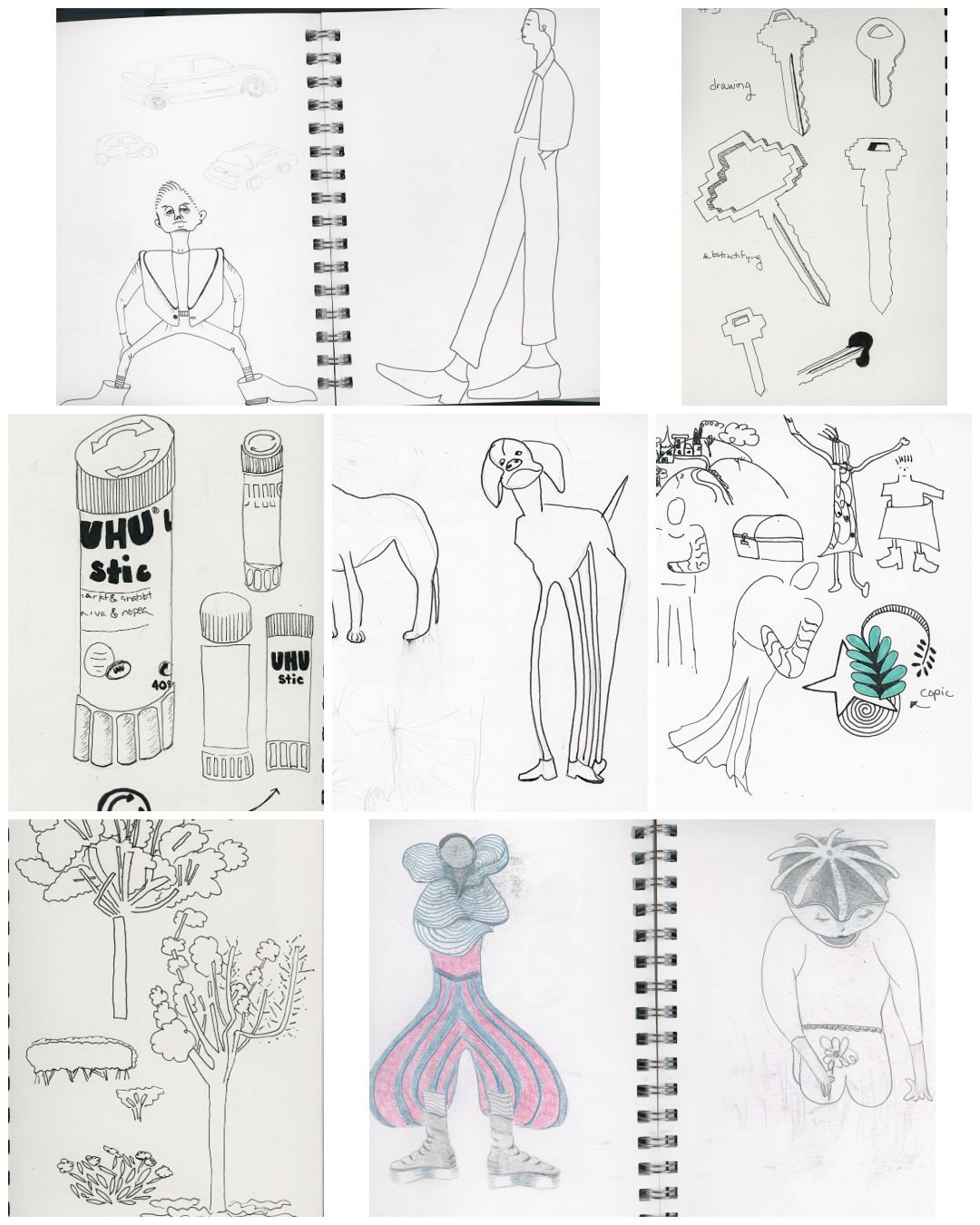
‘Wonkified’ People
Lately I’ve really been into “wonky” figure drawing because while drawing realistically from life is great practice, I’m more interested in abstractifying my subjects. I’ve shared other wonky sketchbook people on the blog, and here are some more:

This is a good example of the value of a sketchbook. These sample pages are pretty rough as I experiment and learn—but I feel like I’m gaining clarity on how I like to draw figures in my more finished work outside of my sketchbook (cards on instagram lately, for example).
Abstract Experiments
And then sometimes I go abstract all the way in my sketchbook practice.. It’s very relaxing when I do this kind of work, but I’m also learning about shapes and what pleases me—which is key to creating. So there’s a lot of experimenting and learning going on in these sketches below, too. I’ve included one of my pages with collage and ink, bottom left corner. Sometimes I like to do quick abstract collages and invariably my subconscious has something to tell me.

Abstractifying
Finally, abstract seems to be a big theme all around. I found myself experimenting a lot with ways to abstractify objects and people. These are mainly just ideas that I hope to flesh out at another time
It’s funny, in the moment, day to day, I often didn’t know what to draw or why one subject interested me over another. I often felt lost, my head started spinning, and there were days where I gave in and didn’t even try.
But my art practice kept me moving forward. Most days, I started to draw anyway even without direction (and most of the time just starting eased all that resistance). And over time, I see now that I was following ideas about how I like to draw—which puts me on firmer ground now.
This is all to say that having a practice—a commitment—to draw something every day, if even for 10 minutes, and a safe place to do it (a messy sketchbook no one else needs to see), kept me going.
Thanks for letting me share.
What I’ve learned in the first thirty—ICAD 2022
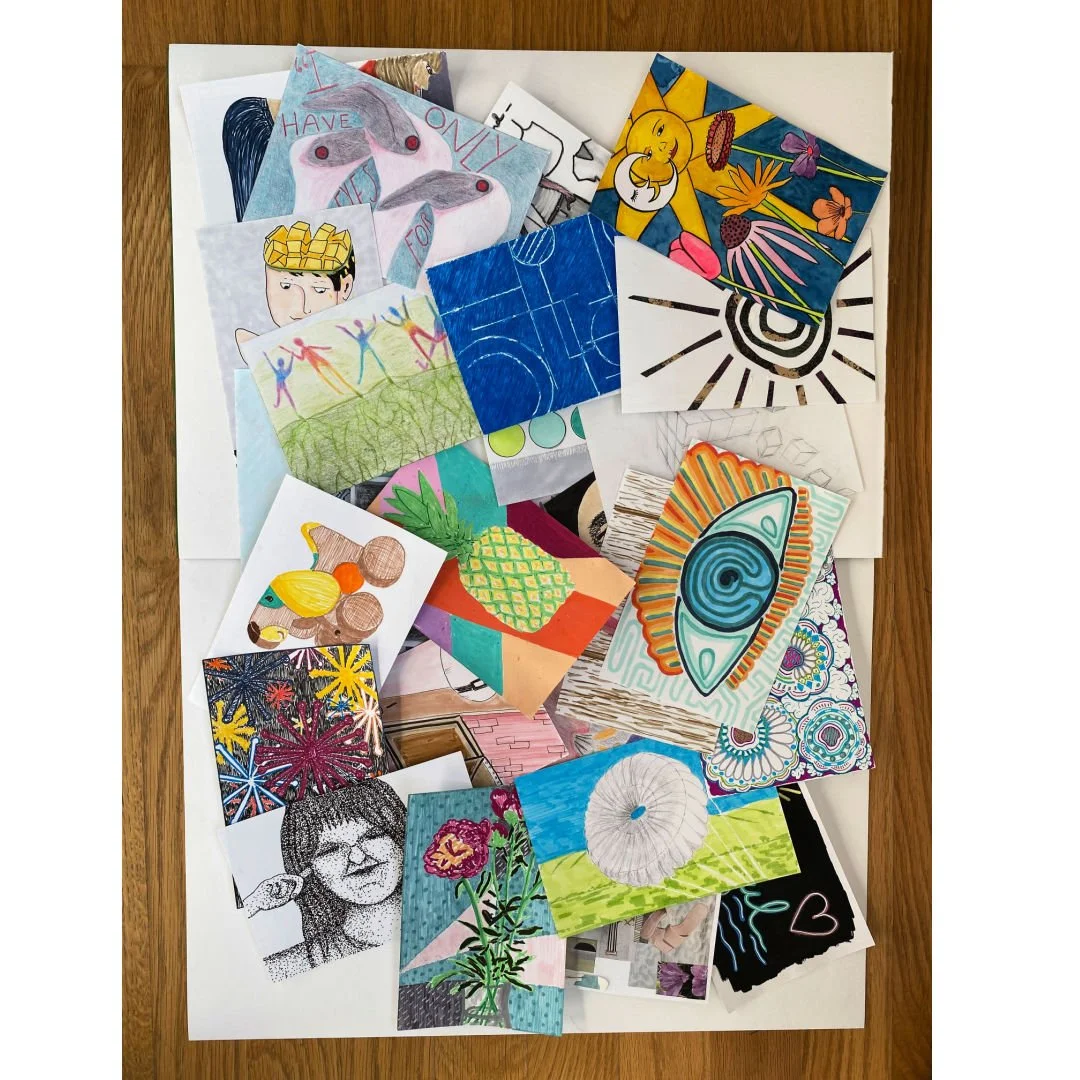
I’ve been busy in June making index card art for the Index Card A Day Challenge (ICAD) hosted by Tammy Garcia of Daisy Yellow Art. The challenge runs for 61 days—June and July—and I’ve been sharing cards daily on Instagram—but this is a good midway point to stop and reflect a moment.
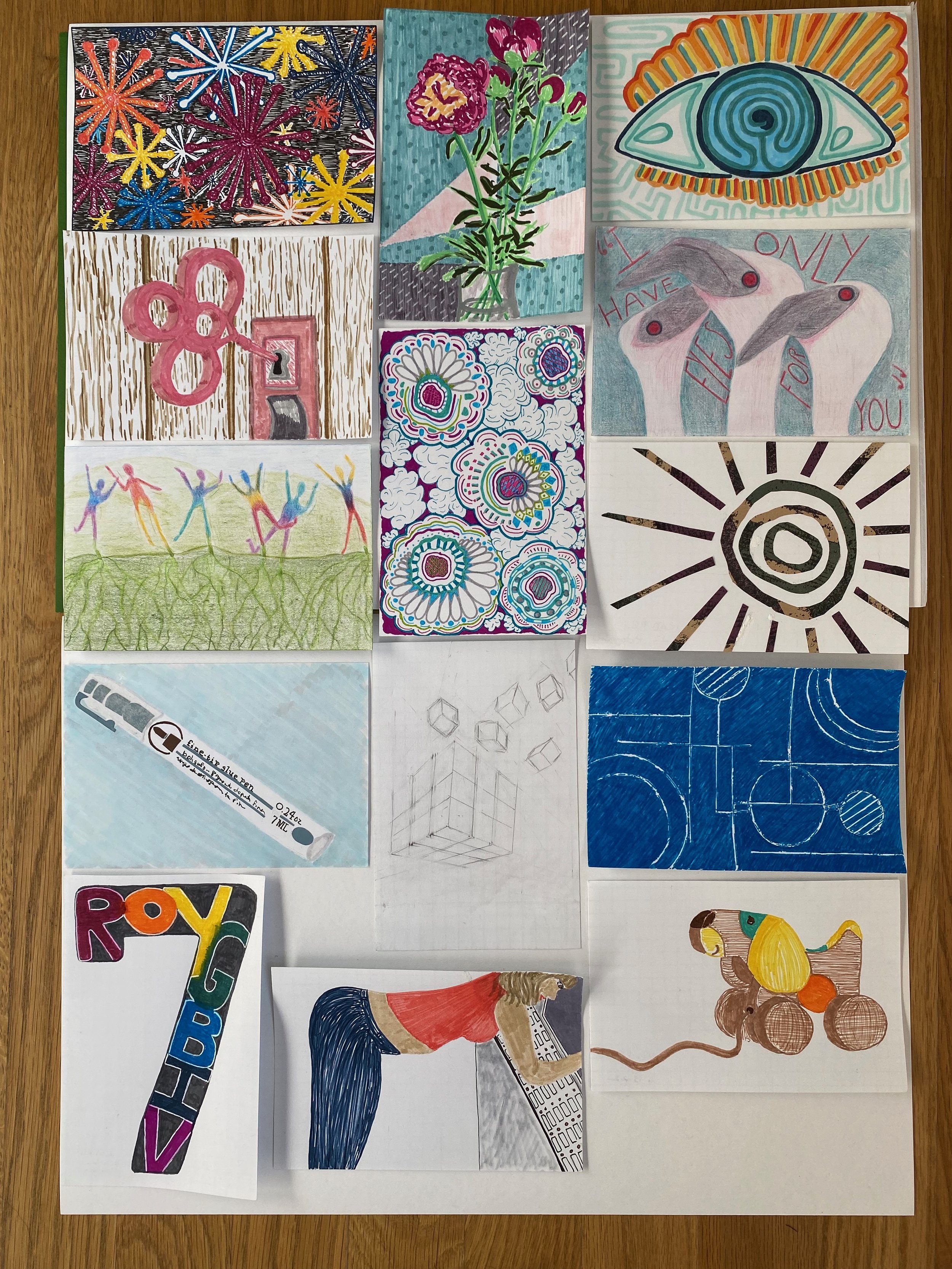
Here are the first 30 cards, close up and more orderly than the above photo:
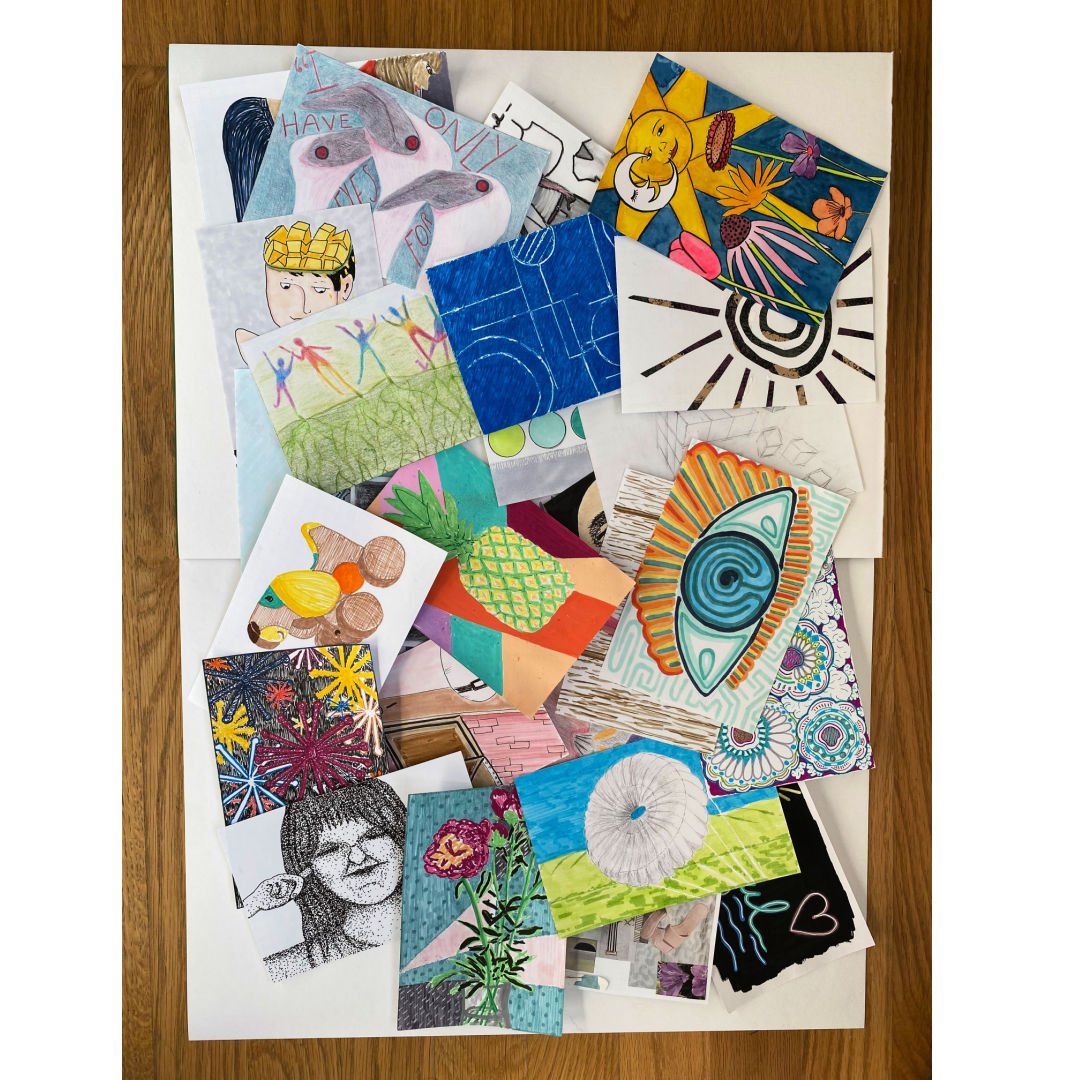
First 30 index cards for ICAD
I’ve been busy in June making index card art for the Index Card A Day Challenge (ICAD) hosted by Tammy Garcia of Daisy Yellow Art. The challenge runs for 61 days—June and July—and I’ve been sharing cards daily on Instagram—but this is a good midway point to stop and reflect a moment.
Here are the first 30 cards, close up and more orderly than the above photo:
I decided to join the challenge at the last minute on June 1. Tammy has been running this challenge for twelve years now, every June and July, and I did complete it probably about 10 years ago when I was just starting my art journey. But I haven’t participated since.
I’m super glad I decided to take the plunge this year!
With ICAD, I’ve learned the value of being less critical and more open—and I think my creative compass has been recalibrated.
You see, this is quick art on index cards that has to be completed every day. I want to spend as little time as possible on it (20 minutes being a goal I sometimes hit, but up to one hour is more often the reality). I have other things to do! So I have to work fast and loose.
As an artist I usually work slowly. Sometimes that’s good because I give myself the time I need, but the truth is I fight perfectionism. I am highly self-critical.
So for this challenge I am forcing myself to “just go with” an idea or a piece in progress that doesn’t seem to work. And there’s been a big payoff. Sometimes, on any day, I’m not happy with the art. And that’s when I get to practice less self-criticism and remind myself tomorrow is another day.
But sometimes—often—I’m surprised and even delighted. What feels like “bad” and “mistake” turns out to be fun or interesting—and I get ideas for more finalized work later.
AND, as I step back here and look at the work as a whole—I’m pleased. Individual flaws matter less. Whaddya know?
I’m sure I will take this lesson in perfectionism into my art practice going forward.
I’m also enjoying doing the challenge with other people. Every day I check out other participants’ art on Instagram at #dyicad2022 (I’m forever grateful to Tammy for pointing out the “Recents” table” when you look at a hashtag screen).
I’m loving how others approach the daily prompts and the challenge and I’ve found other artists whose work I admire to follow.
I also get ideas (but I never check out what others do for a prompt until I have completed mine for the day—personal rule I recommend to avoid even subconscious copying).
ONE of those ideas is a new approach for the final 31 days of the challenge.
Like several other ICAD artists, I’m going to work to a theme. I plan to also still use the prompts, but I’m going to make ICAD in July an opportunity to explore a new-to-me kind of art/art style that is more abstract and shape-driven.
If you follow me on Instagram, you’ll see my day to day progress. Otherwise, Stay tuned here at the end of the month for the what happens next!
OH—and BTW—it’s not too late for YOU to join the challenge too!
One month is a great timeframe! You can go to the Daisy Yellow ICAD 2022 page for details and lists of weekly prompts (if you want to use prompts), but basically all you really need is a stack of index cards and a few art implements of choice (paper and glue? pen and ink? pencil? crayons? Thread and fabric? WHATEVER!).
Fill an index card a day in any way and post it on your instagram account with the hashtag: #dyicad2022 so others doing the challenge can see what you’re doing. THAT’S ALL!
Cheers!