

On simplified drawing and personal blogs
Lately I’ve been striving for a more simplified drawing style, so yesterday I decided to practice in my Sketchbook Journal with a photo reference—a picture I liked from Chris Glass.*
If you click on the link, you’ll see that I left out many details from the photo in my drawing—other people, gadgets, furnishings—but I learned again that what you leave out is as important as what you leave in when drawing. It’s difficult to make those choices.
I don’t think I could

Lately I’ve been striving for a more simplified drawing style, so yesterday I decided to practice in my Sketchbook Journal with a photo reference—a picture I liked from Chris Glass.*
If you click on the link, you’ll see that I left out many details from the photo in my drawing—other people, gadgets, furnishings—but I learned again that what you leave out is as important as what you leave in when drawing. It’s difficult to make those choices.
I don’t think I could have sketched this scene had I been present and drawing in the moment. First, I haven’t yet mastered the challenge of people moving all the time. Yikes! And second, there is SO MUCH to look at in one space! I have never been to Five Guys in my life (it must be an east coast chain), but in person, I’m sure I would have tried to draw it all—and that would not have worked for this drawing like it does in the photo.
I have only started following Chris Glass, by the way, and I’m very glad I added his site to my RSS Reader. The photographs from and about his life are lovely and the brief posts allow me to get to know an interesting person.
It turns out that all my favorite blogs are personal blogs: essentially digital journals from interesting people who are expressing something of—and at least partly for—themselves. And by sharing themselves, readers get the benefit of perspectives, ideas, expertise and inspiration we wouldn’t have otherwise.
Sometimes I worry about the downsides of the internet—alienation, fragmentation, social breakdown…But then we also have gifts like this.
____
*Just a reminder that I know it is never okay to copy someone else’s work unless one is doing so to learn only—which is what I am doing here. Also, it’s important to give credit to the original artist.

My continuing sketchbook saga
I have a confession to make: I’m sick of my current sketchbook—the Crescent Rendr.
This sketchbook, which I’m more than half way through, is too big even though I thought I wanted a larger sketchbook after the last smaller one, and the paper is unsatisfying. It might be good for Copic markers—alcohol ink doesn’t bleed through the paper which is amazing (and the reason I bought it) —but it’s not so great for anything else.
Watercolor and gouache smear rather than soak into the fibers, and I just don’t like the feel of it on my hand. It feels kind of coarse--but it actually has no texture.
And…yes, I admit it, my disillusion with the current one might also have something to do with the allure of a newer
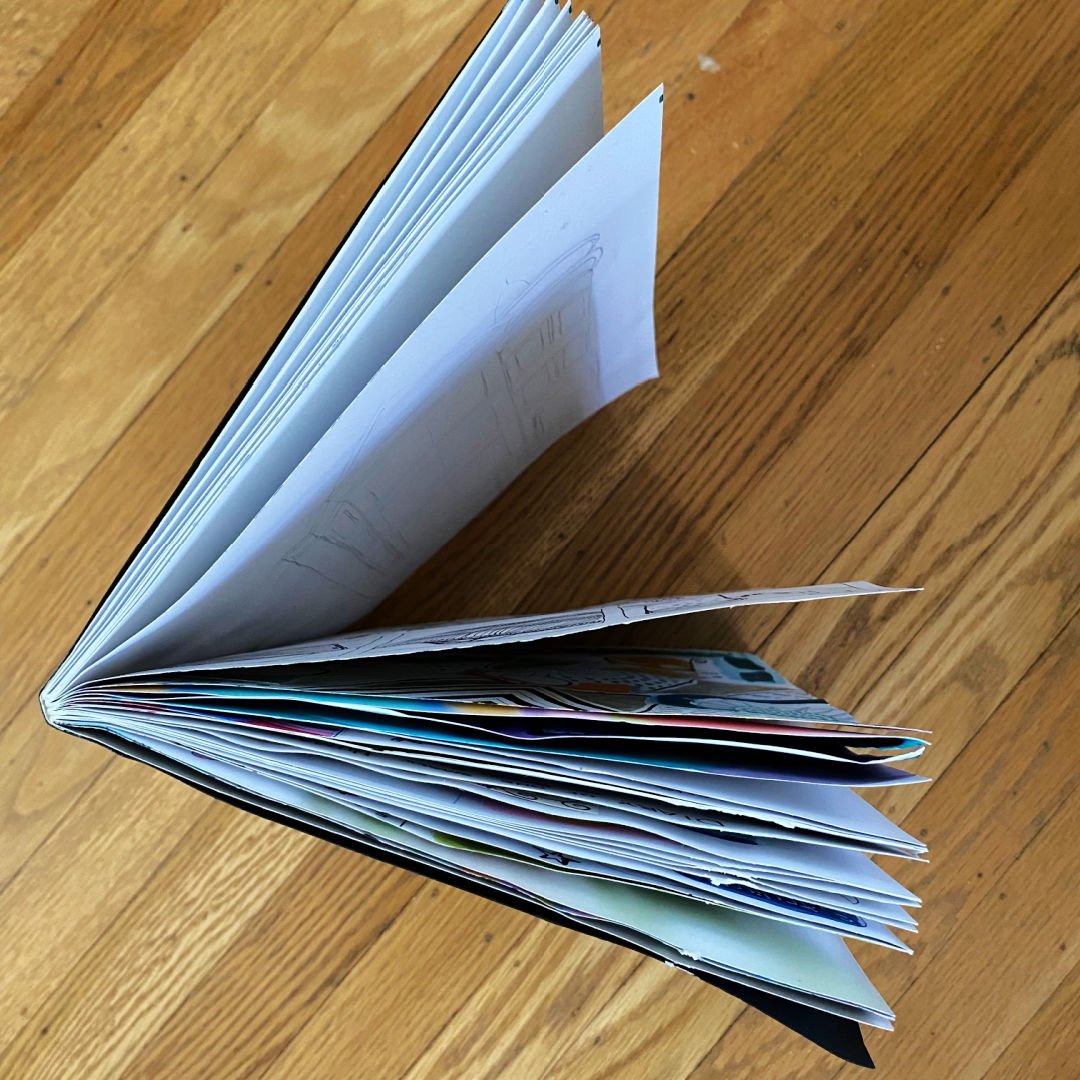
I have a confession to make: I’m sick of my current sketchbook—the Crescent Rendr.
This sketchbook, which I’m more than half way through, is too big even though I thought I wanted a larger sketchbook after the last smaller one, and the paper is unsatisfying. It might be good for Copic markers—alcohol ink doesn’t bleed through the paper which is amazing (and the reason I bought it) —but it’s not so great for anything else.
Watercolor and gouache smear rather than soak into the fibers, and I just don’t like the feel of it on my hand. It feels kind of coarse--but it actually has no texture.
And…yes, I admit it, my disillusion with the current one might also have something to do with the allure of a newer and better one currently waiting for me on the shelf. It holds all the shimmering possibilities of just the right size and feel.
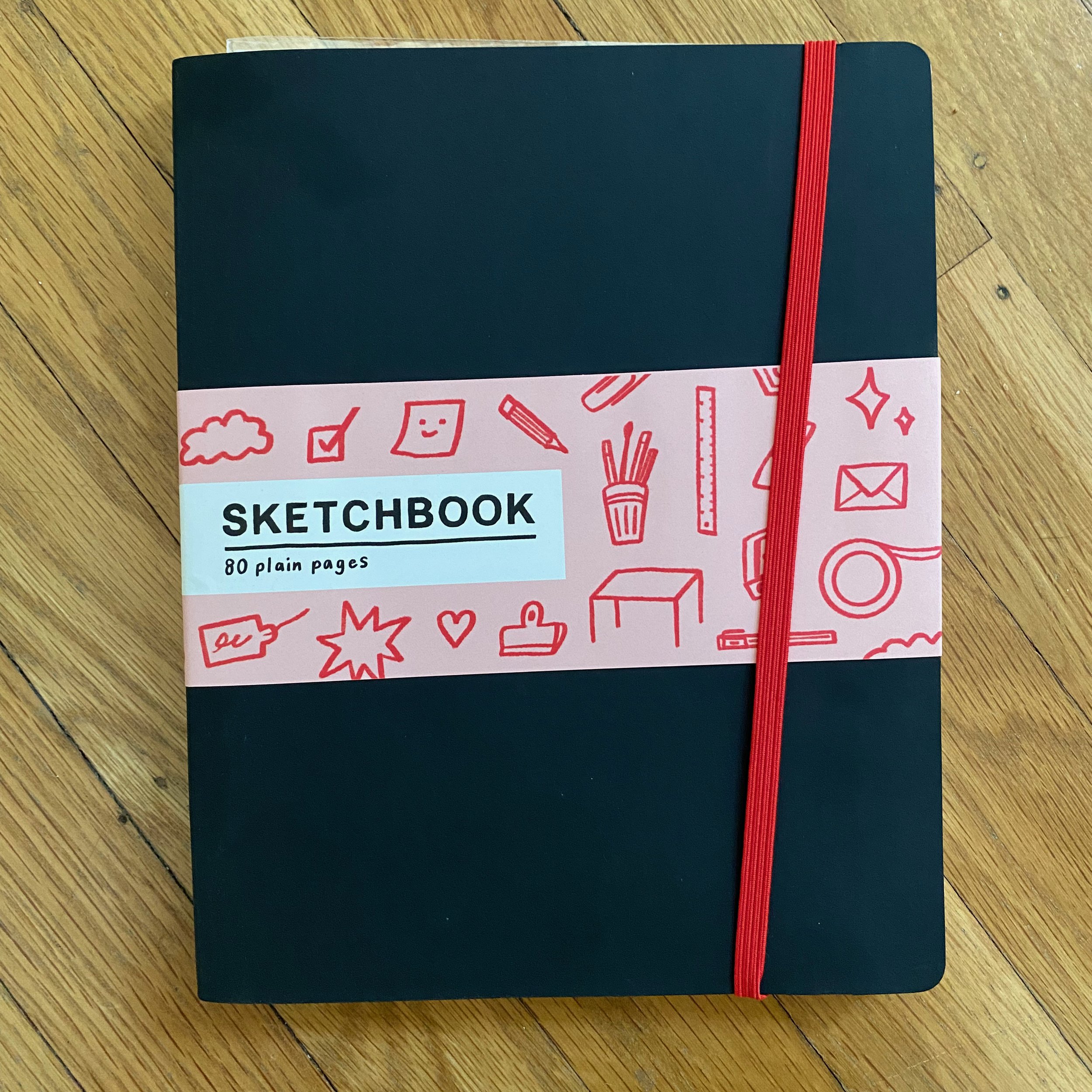
If you keep sketchbooks, you understand.
There’s just nothing like the possibility of a new blank sketchbook. Maybe this time it will be the perfect one: perfect size, layout, binding and paper…
Especially the paper.
So why don’t I just stop working in the Rendr and start in on the new one?
Well, for two reasons.
First, I do tend to lose interest about half way through, but there’s only one thing I hate more than a sketchbook I no longer love—and that’s a sketchbook on my shelf that is only half filled.
In the past I kept multiple sketchbooks—one for travel, one for urban sketching, one for journaling, one for art journaling, one for practice…so I could have different kinds of sketchbooks for different purposes. But that kind of made me crazy—always looking for different books, figuring out what to take where, what book I felt like working in.
And it took forever to fill any one of them. So many empty sketchbooks waiting to be filled.
I decided not too long ago to work in just ONE sketchbook for all the art things, which I fill in random order according to purpose (and I also keep one Everything Journal for planning, journaling and notes, but that’s different).
Now that it’s just one book at a time, I promised myself that I would finish each book before moving on to the next.
The second reason I’m not giving up on the Rendr until its complete is because I know better.
I know that there is no perfect sketchbook
Especially for different purposes. But that doesn’t mean I won’t keep looking and falling in love with the next best sketchbook—where’s the fun in that?
I’m not going to make the mistake of believing the new model will solve all my art problems.
And it’s not like I’m unhappy with the work I’m doing in the current sketchbook. Progress is happening and I’m overall pleased with the contents.
So I’ll just keep going—
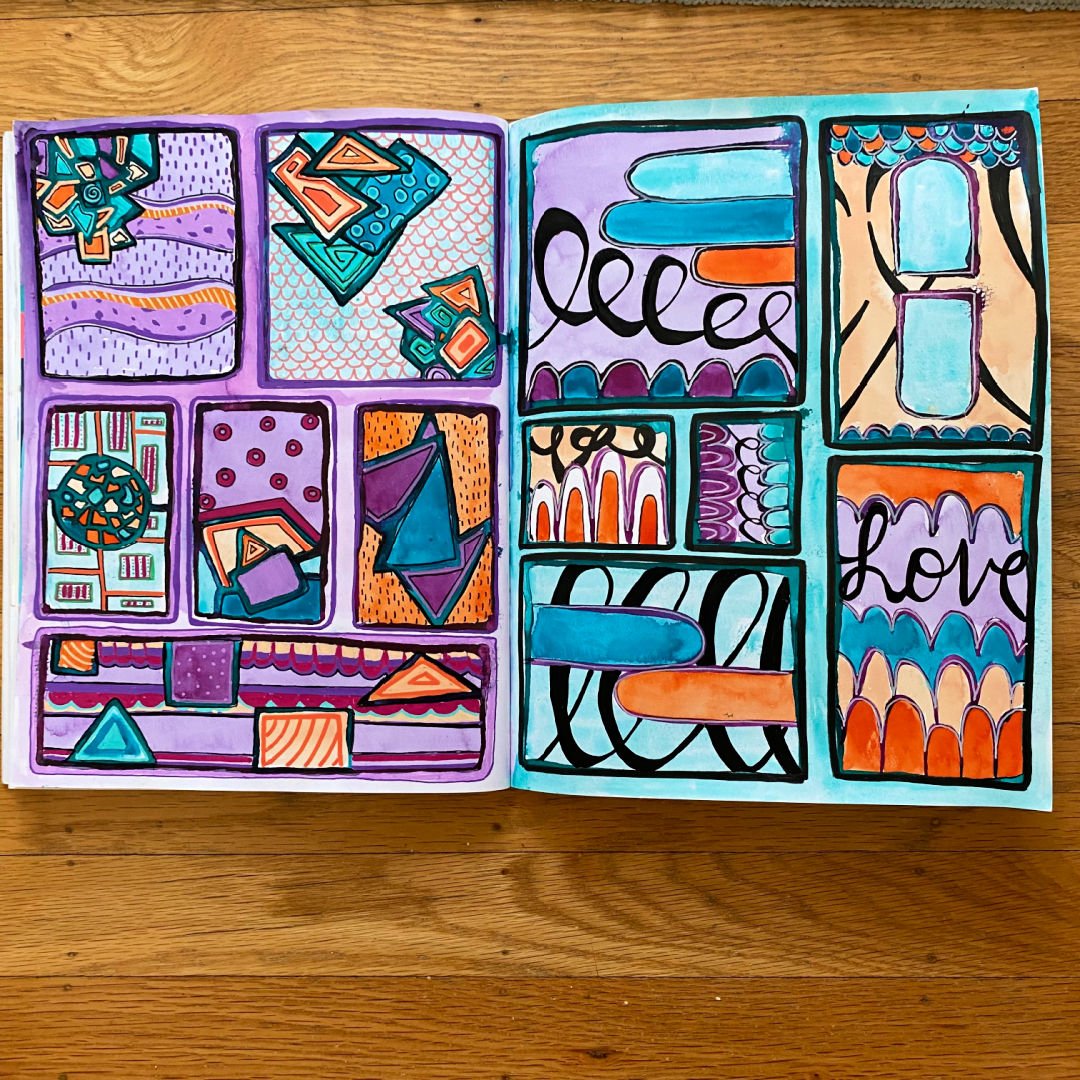
With more abstracts like these:
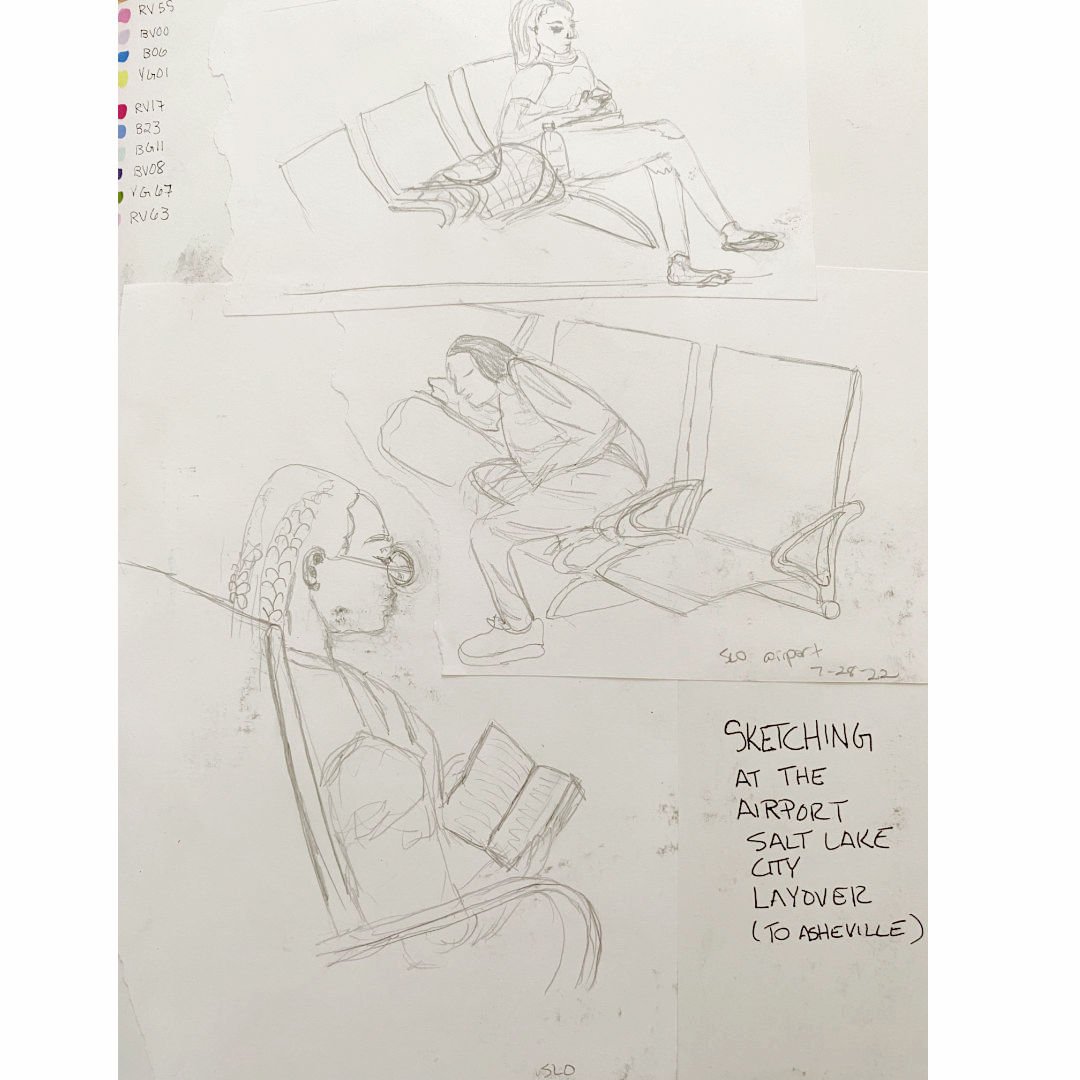
With more urban sketching:
An illustrated life page or two now and then…
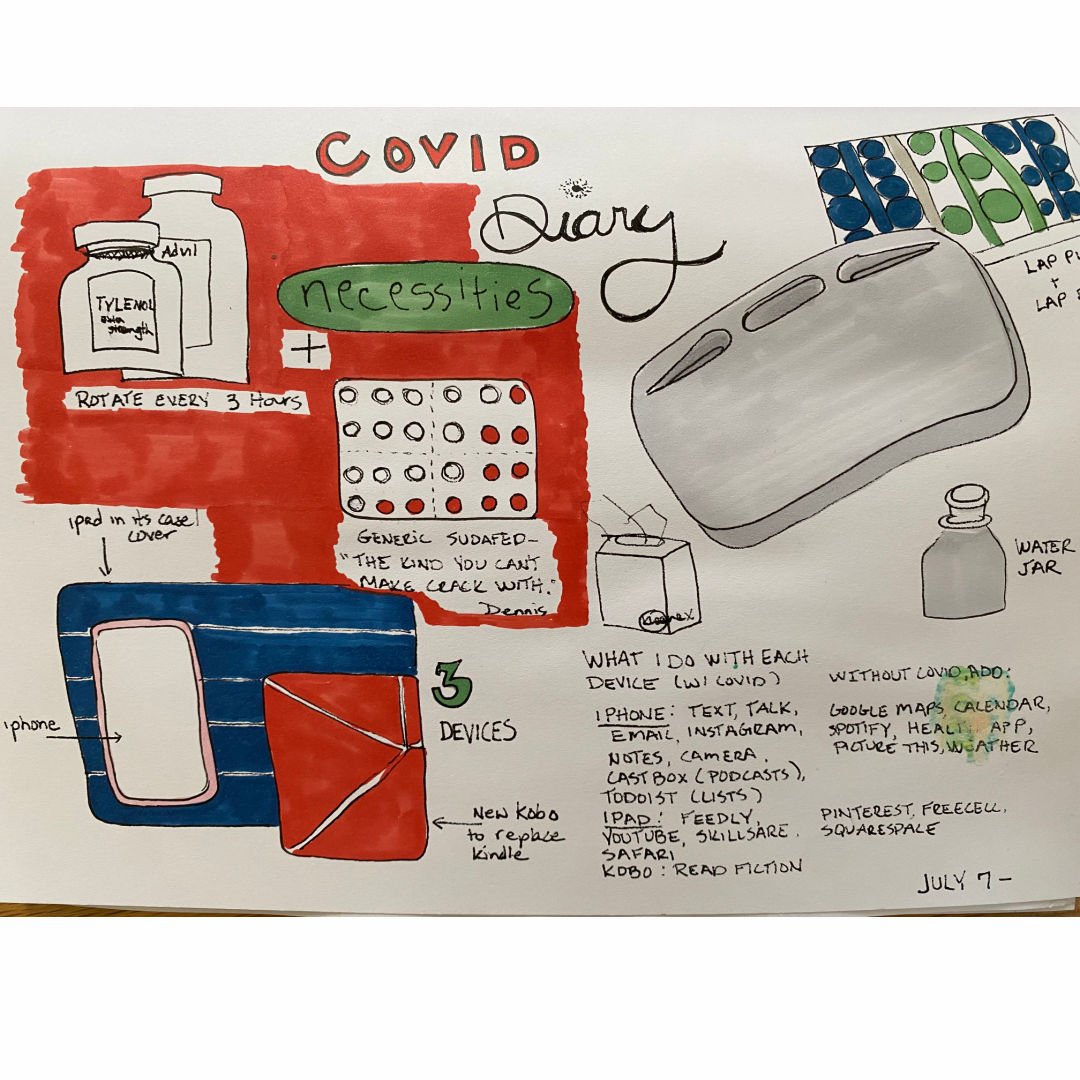
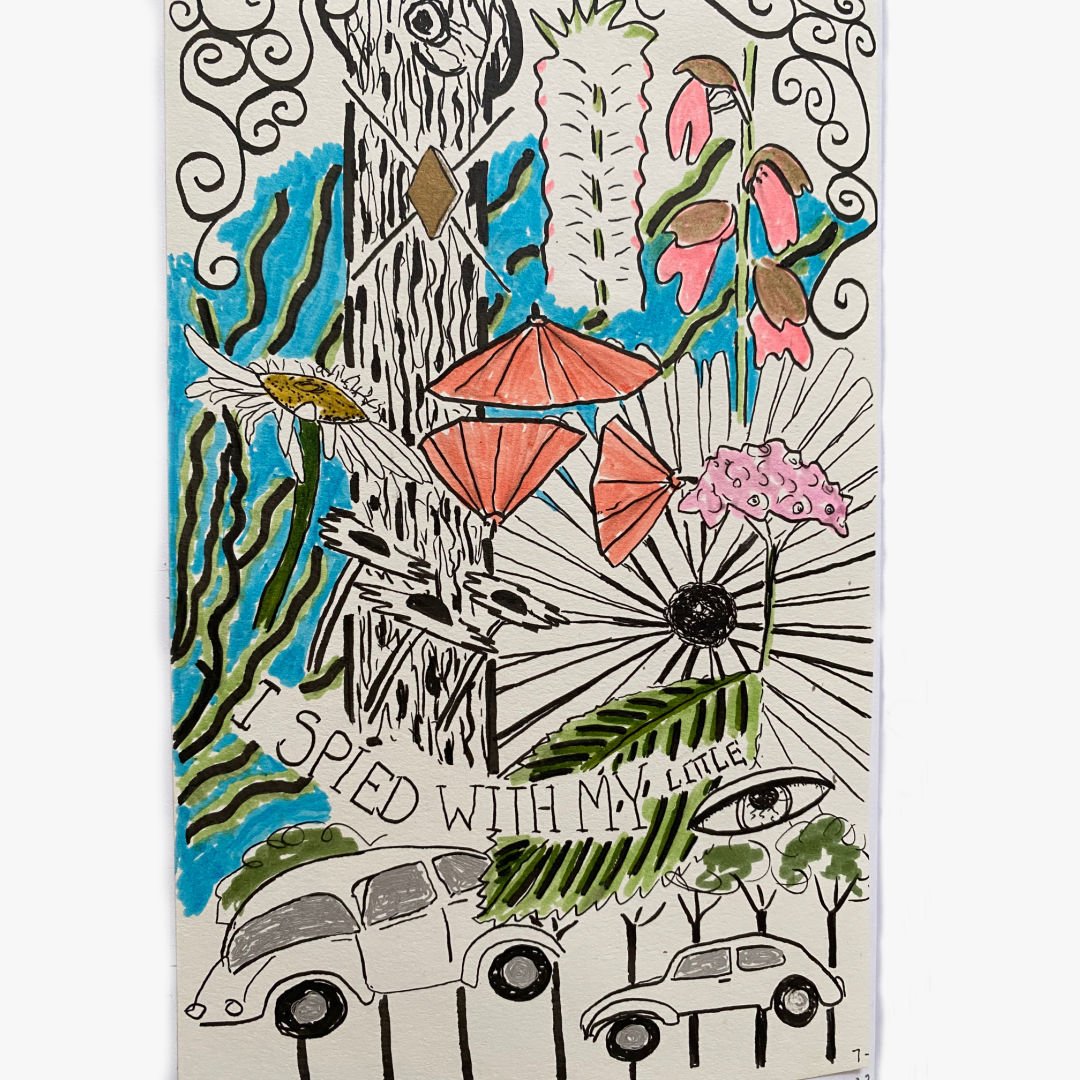
There’s so many ways to fill a sketchbook.
And the truth is—it’s really not about the sketchbook itself much at all.

A peak into my sketchbook
I haven’t shared much of my sketchbook lately, partly because I’m focused on making cards and more cards! So today I thought I’d open it up and talk a bit about the what I’m learning and working on.
Now you should know there many kinds of sketchbooks and I’ve tried them all—art journals, visual journals, illustrated journals and diaries, bullet journals, composed sketchbooks and messy practice sketchbooks.
These days I’ve streamlined my art practice into projects (like the cards right now) and three books: 1) an “everything” journal, which is a daily tool I use to journal, plan, track my practice and keep notes, 2) an art journal that I slowly fill with more composed pages, and 3) a messy anything-goes kind of sketchbook for daily practice and exploration.
When one fills up, I start filling another in chronological order. In any year I find myself filling three or more everything journals, 1-2 art journals and maybe 4-6 sketchbooks.
The art journal I leave at home for the most part to work on in the studio, but the journal and sketchbook
I haven’t shared much of my sketchbook lately, partly because I’m focused on making cards and more cards! So today I thought I’d open it up and talk a bit about what I’m learning and working on.
Now you should know there are many kinds of sketchbooks and I’ve tried them all—art journals, visual journals, illustrated journals and diaries, bullet journals, composed sketchbooks and messy practice sketchbooks.
These days, besides working on specific art projects and challenges, I’ve streamlined my art practice into three books: 1) an “everything” journal, which is a daily tool I use to journal, plan, track my practice and keep notes, 2) an art journal that I slowly fill with more composed pages, and 3) a messy anything-goes kind of sketchbook for daily practice and exploration.
When one fills up, I start filling another in chronological order. In any year I find myself filling three or more everything journals, 1-2 art journals and maybe 4-6 sketchbooks.
I leave thee art journal at home for the most part to work on in the studio, but the journal and sketchbook are daily tools I work with at home and while I’m traveling or out and about so I keep them both to a small A5 size. I have a nice elastic case that wraps around both books and holds just the essential pens and pencils so they travel as one unit.


I’ll share more about the other books in later posts, but today I want to focus on my sketchbook.
Keeping a sketchbook is the foundation of my art practice. This is where I consistently practice and experiment. It’s where I build skills and find my way as an artist. I can work in it for 10 minutes or two hours, but as long as I spend some time in my sketchbook my day feels complete.
I only share select sketchbook pages (many are just plain messy and incomplete!)—so there’s no pressure to get everything “right”. There’s a lot of trial and error. It’s a place to let go and really experiment, make mistakes, see what comes. Often ideas start here and end up elsewhere in more fully developed pieces.
Anyway, it’s nice to look back every now and then to see for myself what I’m up to (because honestly, sometimes in the middle of it all, I have no idea!) and to see some value in the mess.
So for the last few months, it seems I’ve been…
Drawing from Life
Sometimes I get my butt outside to draw from life. This is the BEST way to build drawing skills—that is, to translate what we see with our eyes onto the page. No matter how unrealistically I actually like to draw, the best foundation is real-life drawing. I know I can’t do too much urban sketching—and it’s one of my goals for my practice to get outside more and draw.

‘Wonkified’ People
Lately I’ve really been into “wonky” figure drawing because while drawing realistically from life is great practice, I’m more interested in abstractifying my subjects. I’ve shared other wonky sketchbook people on the blog, and here are some more:

This is a good example of the value of a sketchbook. These sample pages are pretty rough as I experiment and learn—but I feel like I’m gaining clarity on how I like to draw figures in my more finished work outside of my sketchbook (cards on instagram lately, for example).
Abstract Experiments
And then sometimes I go abstract all the way in my sketchbook practice.. It’s very relaxing when I do this kind of work, but I’m also learning about shapes and what pleases me—which is key to creating. So there’s a lot of experimenting and learning going on in these sketches below, too. I’ve included one of my pages with collage and ink, bottom left corner. Sometimes I like to do quick abstract collages and invariably my subconscious has something to tell me.

Abstractifying
Finally, abstract seems to be a big theme all around. I found myself experimenting a lot with ways to abstractify objects and people. These are mainly just ideas that I hope to flesh out at another time
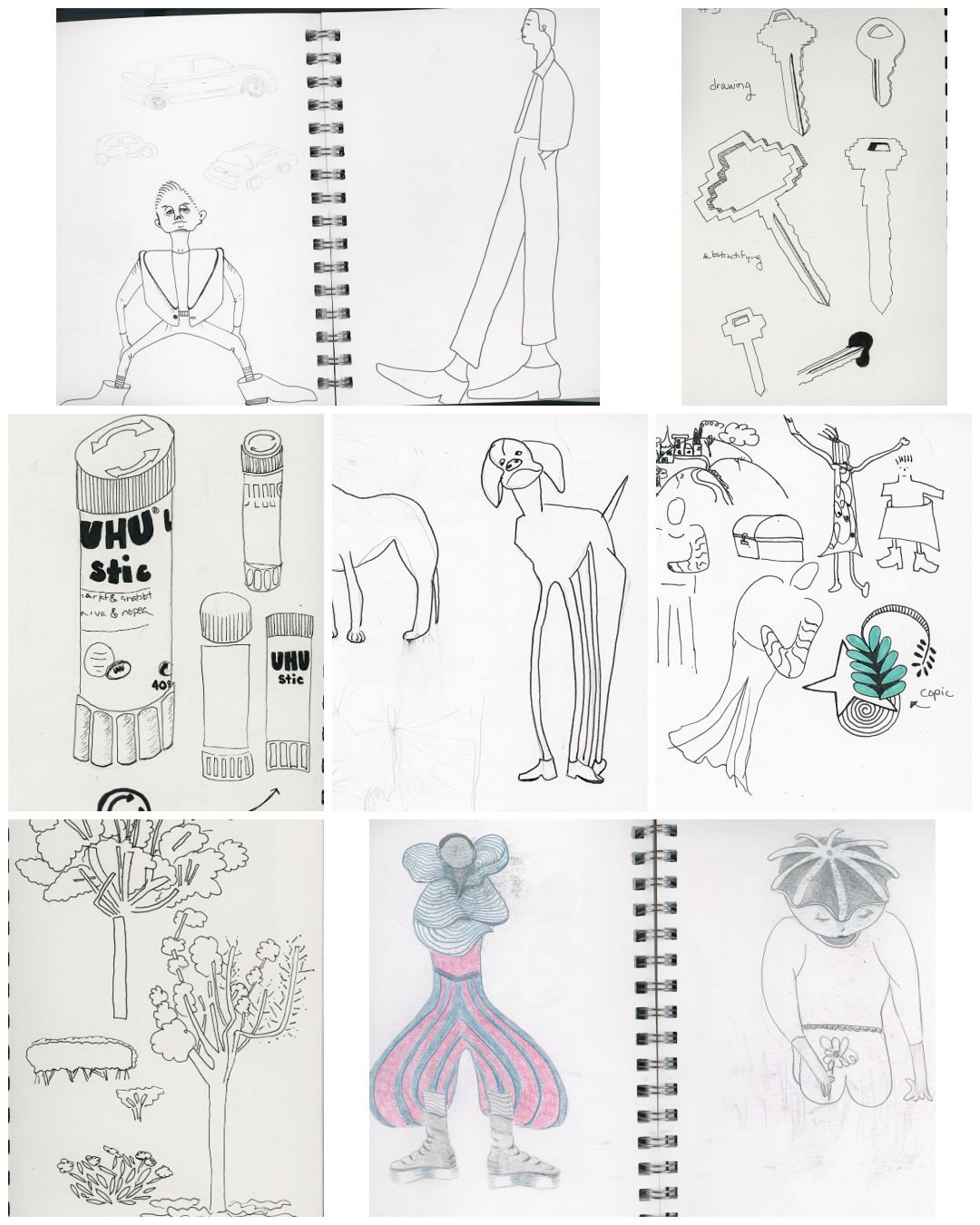
It’s funny, in the moment, day to day, I often didn’t know what to draw or why one subject interested me over another. I often felt lost, my head started spinning, and there were days where I gave in and didn’t even try.
But my art practice kept me moving forward. Most days, I started to draw anyway even without direction (and most of the time just starting eased all that resistance). And over time, I see now that I was following ideas about how I like to draw—which puts me on firmer ground now.
This is all to say that having a practice—a commitment—to draw something every day, if even for 10 minutes, and a safe place to do it (a messy sketchbook no one else needs to see), kept me going.
Thanks for letting me share.

Posada De Las Flores — Urban Sketch
I did it! I actually took one hour of my vacation in Loreto, sat myself down and in my art journal drew the lobby of this lovely hotel where we stayed that night. Then, still on vacation, I took another block of time a few days later, sat myself down and finished it with watercolor and linework. As I said last week, I have such a hard time carving out time for art while traveling so this is a huge accomplishment.
And the drawing isn’t half bad either. Ha ha.
All kidding aside, as soon as I stepped into the lobby of the Posada de Las Flores — Inn of Flowers — I knew I had to draw it! All those angles! That circular staircase to floors two and three! The water fountain! the colors! It was a great drawing challenge. I certainly didn’t get it all right — at all — but I’m pleased. My urban sketching is making progress, I think.

I did it! I actually took one hour of my vacation in Loreto, sat myself down and in my art journal drew the lobby of this lovely hotel where we stayed that night. Then, still on vacation, I took another block of time a few days later, sat myself down and finished it with watercolor and linework. As I said last week, I have such a hard time carving out time for art while traveling so this is a huge accomplishment.
And the drawing isn’t half bad either. Ha ha.
All kidding aside, as soon as I stepped into the lobby of the Posada de Las Flores — Inn of Flowers — I knew I had to draw it! All those angles! That circular staircase to floors two and three! The water fountain! the colors! It was a great drawing challenge. I certainly didn’t get it all right — at all — but I’m pleased. My urban sketching is making progress, I think.

Routine, momentum and art practice interruptions
I do love a vacation—I do—but I can’t quite resolve the pain of breaking away from my art practice. It doesn’t matter for how long I go away, it might be a quick four day weekend like last week to southern California or several weeks to a destination further away, there’s this huge disruption not just to my time, but to my attention.
I lose my focus and momentum stalls. Both on the road—where I struggle to take time for art—and when I get back and forget what I was working on before I left.
Every vacation.
If you have an art practice, do you struggle with this? It’s really frustrating!
I’ve been working on solutions.
Today I will focus on the problem of taking time for art while on the road. I enjoy

urban sketching in Santa Barbara — Polychromos Colored pencils
I do love a vacation—I do—but I can’t quite resolve the pain of breaking away from my art practice. It doesn’t matter for how long I go away, it might be a quick four day weekend like last week to southern California or several weeks to a destination further away, there’s this huge disruption not just to my time, but to my attention.
I lose my focus and momentum stalls. Both on the road—where I struggle to take time for art—and when I get back and forget what I was working on before I left.
Every vacation.
If you have an art practice, do you struggle with this? It’s really frustrating!
I’ve been working on solutions.
Today I will focus on the problem of taking time for art while on the road. I enjoy traveling and breaks from life routines are good for the soul. But breaks from the routines of an art practice are not at all good for the soul, at least for me.
I know I need to do a better job of scheduling sketching time into the travel itinerary.
This past weekend, I took a half day to go off to Santa Barbara by myself to do some urban sketching in my sketchbook while Dennis and our friends did something else. I really enjoying taking the time I needed to sketch these two drawings—one before and the other during lunch. I have very little urban sketching experience and I’m kind of slow, so I didn’t feel rushed and I had so much fun drawing!

I had lunch at Chase Restaurant, which opened when I was a student in Santa Barbara (long time ago!) — Polychromos colored pencils and ink.
Usually, though, I can’t seem to get away by myself and/or get enough uninterrupted time to draw while traveling. I can’t seem to relax enough to take advantage of small in-between moments, and it’s also difficult to take larger chunks of time for myself.
This is about me worrying too much about others and not enough about what I need. I know that. It’s my heart’s strong desire to take time every day to create. I can’t quite explain why, even to myself, but all I know is that no matter what else I do in a day, whether I’m traveling or not, I do not feel complete if I don’t spend at least a little time creating.
So I need to acknowledge and honor what I need and then I must schedule in and take the time to draw. Fortunately, I’ll have plenty of opportunity as we have a fair amount of travel ahead, and in fact I’m going away again next week.
Finally and by the way, I’m pleased with both sketches above for the most part. I’m aiming for less realistic rendering, which I think I achieved, and I enjoyed using colored pencils. However. There’s so much to improve! I just need much more practice…
So much of art practice is life practice. Repeat after me: I will honor what I need.